

Why You Need A Beginner Cryptocurrency Trading Guide
Crypto trading looks exciting from the outside. Prices move fast. Stories of big gains spread quickly online. But without the right knowledge, new traders lose money faster than they make it. That is why a proper beginner cryptocurrency trading guide matters before you spend a single dollar.
This guide breaks trading into small, clear steps. You will learn how exchanges work, how wallets keep your coins safe, and how to place your first trade without confusion. You will also learn simple risk rules that protect your money from the very first day.
Cryptocurrency trading means buying and selling digital coins like Bitcoin or Ethereum to profit from price changes. Unlike stocks, crypto markets never close. They run all day, every day, including weekends. This makes crypto exciting, but it also makes it risky for people who jump in without a plan.
Think of this beginner cryptocurrency trading guide as your starting map. It will not turn you into an expert overnight. But it will help you avoid the common mistakes that trap most new traders in their first month.

What Is Cryptocurrency Trading
Cryptocurrency trading is the act of buying digital coins at one price and selling them at a different price to make a profit. These coins run on blockchain technology, a shared digital ledger that records every transaction. No single company or government controls this ledger. That is what makes crypto different from normal money.
Bitcoin was the first cryptocurrency and remains the most well-known. Ethereum came next and introduced smart contracts, which are self-running programs used for apps, games, and finance tools. Thousands of other coins, often called altcoins, now exist. Some have real use cases. Many do not.
For someone new to markets, it helps to separate trading from investing. Investing usually means buying a coin and holding it for months or years. Trading means buying and selling more often to catch short-term price moves. Both carry risk, but trading demands more attention, faster decisions, and stronger emotional control.
A solid beginner cryptocurrency trading guide always starts here, with the basic difference between trading and investing, because mixing the two up leads to confused strategies and poor decisions later.
Choosing The Right Crypto Exchange
Your first real step is picking a place to trade. This is called a crypto exchange. It works like a marketplace where buyers and sellers meet. Popular platforms include Binance, Coinbase, Kraken, and Bybit. Each one offers slightly different fees, coins, and tools.
When comparing exchanges, focus on five things: security, fees, coin selection, ease of use, and customer support. A good exchange protects user funds with strong security features like two-factor authentication and cold storage for most of its assets.
| Feature | What To Check | Why It Matters |
| Security | Two-factor login, insurance funds | Protects your money from hacks |
| Fees | Trading fees, withdrawal fees | Lower fees mean higher profits |
| Coins Available | Bitcoin, Ethereum, major altcoins | More choice for beginners |
| Ease of Use | Simple app, clear charts | Easier learning curve |
| Support | Live chat, help center | Faster help when issues arise |
Most exchanges require identity verification, known as KYC (Know Your Customer), before you can deposit money. This is a normal legal requirement, not a red flag. Once verified, you can fund your account through a bank transfer or card payment. Bank transfers are usually cheaper than cards.
This step forms the backbone of any practical beginner cryptocurrency trading guide, since the wrong exchange choice can cost you in hidden fees or weak security later.
Setting Up A Crypto Wallet
Once you buy coins, you need somewhere safe to keep them. This is called a wallet. Many beginners leave coins directly on the exchange, which is convenient but risky. If the exchange gets hacked or shuts down, your coins could be lost.
There are two main wallet types: hot wallets and cold wallets. A hot wallet stays connected to the internet, such as a mobile app. It is convenient for frequent trading but slightly less secure. A cold wallet stays offline, often as a physical device. It offers stronger protection for long-term holdings.
For beginners, a simple rule works well. Keep small amounts you plan to trade soon on the exchange or a hot wallet. Move larger amounts you want to hold for months into a cold wallet. This spreads your risk and limits potential losses.
Never share your private key or recovery phrase with anyone. This string of words or numbers is the only way to access your wallet. If someone steals it, they can take your funds instantly, and there is no way to reverse the transaction. Write it down on paper and store it somewhere safe, away from your phone or computer.
Wallet safety is one of the most skipped sections in online guides, yet it remains one of the most important parts of any honest beginner cryptocurrency trading guide.
Understanding Order Types Before You Trade
Before placing your first trade, learn the basic order types. This small step prevents costly mistakes later. Most exchanges offer three common orders: market orders, limit orders, and stop-loss orders.
A market order buys or sells instantly at the current price. It is fast but can lead to slightly worse prices during volatile moments. A limit order lets you set your own price, and the trade only happens when the market reaches that price. This gives you more control but no guarantee of instant execution.
A stop-loss order automatically sells your coin if the price drops to a certain level. This protects you from larger losses if the market moves against you suddenly.
| Order Type | How It Works | Best For |
| Market Order | Executes instantly at current price | Quick entries and exits |
| Limit Order | Executes only at your chosen price | Patient traders wanting control |
| Stop-Loss Order | Sells automatically at a set price | Protecting against big losses |
Learning these order types early saves beginners from panic decisions during sudden price swings. Every reliable beginner cryptocurrency trading guide treats order types as core knowledge, not an optional extra.
Basic Risk Management Rules For New Traders
Risk management separates traders who last from those who quit after one bad month. The golden rule among experienced traders is simple: never risk more than one to two percent of your total trading money on a single trade.
This means if you have five hundred dollars, you should not risk more than five to ten dollars on one trade. This might sound small, but it keeps you in the game even after a string of losses. Many beginners break this rule out of excitement and lose their entire account within weeks.
Setting a stop-loss before entering any trade is another core habit. Decide your maximum acceptable loss before you buy, not after the price starts falling. This removes emotional decision-making from the equation.
Diversifying across a few coins, instead of putting everything into one, also reduces risk. Bitcoin and Ethereum are generally considered more stable than smaller altcoins, making them safer starting points for beginners.
Emotional control matters just as much as technical rules. Fear and greed drive most bad trading decisions. A calm, planned approach always beats impulsive buying during hype or panic selling during a dip. This is the heart of every trustworthy beginner cryptocurrency trading guide.
Reading Basic Crypto Charts
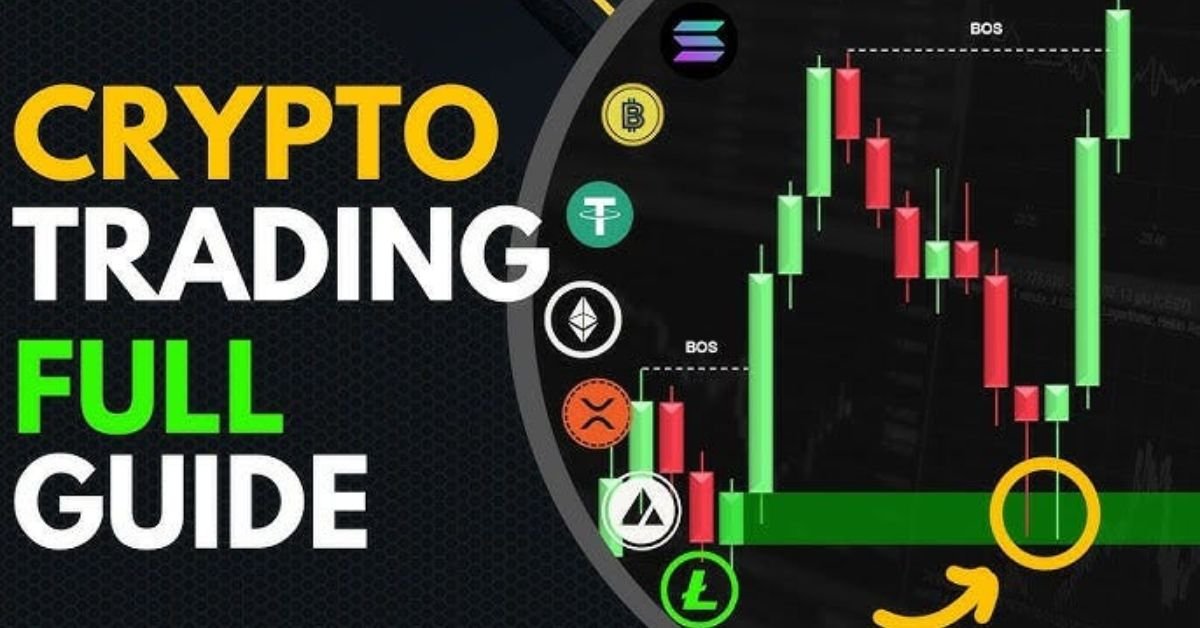
Charts show how prices move over time and help traders decide when to buy or sell. For beginners, the most useful chart type is the candlestick chart. Each candle shows the opening price, closing price, and the highest and lowest points during a specific time period.
Green or white candles usually mean the price went up. Red or black candles mean the price went down. Looking at a series of candles helps traders spot trends, whether prices are generally rising, falling, or moving sideways.
Two other useful concepts are support and resistance. Support is a price level where a coin tends to stop falling and bounce back up. Resistance is a level where the price tends to stop rising and pull back down. These levels help traders decide good entry and exit points.
Volume, which shows how many coins were traded during a period, adds extra confidence to chart signals. A price move backed by high volume is generally considered more reliable than one with low volume.
Beginners should not rely only on charts. Combining chart reading with the risk rules from the previous section gives a stronger foundation. Any complete beginner cryptocurrency trading guide treats charts as one tool among several, not a magic solution.
Read more for info: https://thecryptogrowth.com/best-cryptocurrency-investment-strategies/
Common Mistakes Beginners Should Avoid

Many new traders repeat the same errors. Recognizing these early can save real money and stress. One frequent mistake is trading with money needed for daily expenses. Crypto markets are volatile, and using essential funds adds dangerous pressure to every decision.
Another common error is chasing quick hype around trending coins without research. Social media often promotes coins right before their price crashes. Following trends blindly, instead of checking fundamentals, has cost many beginners their savings.
Overtrading is another trap. Placing too many trades in a short time increases fees and emotional fatigue, often leading to poor judgment. Patience usually beats constant activity in trading.
Ignoring security basics, such as reusing passwords or skipping two-factor authentication, also puts funds at unnecessary risk. Hackers actively target crypto accounts because transactions cannot be reversed once completed.
| Mistake | Why It Hurts | Simple Fix |
| Trading with essential funds | Creates panic decisions | Use only spare money |
| Chasing hype coins | Leads to buying at peak prices | Research before buying |
| Overtrading | Increases fees and stress | Trade with a plan, not impulse |
| Weak account security | Risks permanent fund loss | Enable two-factor authentication |
Avoiding these mistakes is often more valuable than finding the perfect strategy. This section alone makes a beginner cryptocurrency trading guide genuinely useful rather than just theoretical.
Building A Simple Trading Plan
A trading plan keeps decisions consistent instead of emotional. Start by writing down your goals. Are you trading for extra income, learning experience, or long-term growth? Your answer shapes how often you trade and how much risk you accept.
Next, decide your trading style. Some beginners prefer swing trading, holding coins for days or weeks to catch bigger price moves. Others prefer short-term trading, which demands more time and attention. Beginners often find swing trading easier to manage alongside daily responsibilities.
Set clear rules for entry, exit, and risk before opening any trade. Write these rules down and follow them strictly, even when emotions suggest otherwise. Review your trades weekly to spot patterns in your wins and losses.
Keeping a simple trading journal helps enormously. Record the coin, entry price, exit price, and reason for the trade. Over time, this journal reveals which strategies actually work for you personally.
A written plan turns trading from guesswork into a structured skill. This final building block completes a well-rounded beginner cryptocurrency trading guide that beginners can actually follow with confidence.
Conclusion
Starting crypto trading does not need to feel overwhelming. Choose a secure exchange, protect your coins with a proper wallet, learn basic order types, and follow strict risk rules from day one. Combine this with simple chart reading and a written trading plan, and you already stand ahead of most beginners who jump in without preparation.
This beginner cryptocurrency trading guide gives you the foundation. The next step is practice, patience, and continuous learning as markets evolve.
Frequently Asked Questions
Is crypto trading safe for beginners?
Crypto trading carries real risk due to price swings, but beginners can trade safely by using regulated exchanges, securing wallets properly, and following strict risk management rules like never risking more than a small percentage of total funds per trade.
How much money do I need to start trading crypto?
There is no fixed amount. Many exchanges allow beginners to start with as little as ten or twenty dollars. It is smarter to start small, learn the process, and increase your trading amount gradually as confidence grows.
Which cryptocurrency should beginners trade first?
Bitcoin and Ethereum are usually recommended first because they are more established and less volatile than smaller altcoins. Starting with these two coins helps beginners understand market behavior before exploring riskier assets.
Do I need to understand blockchain technology to trade crypto?
A deep technical understanding is not required, but knowing the basics of how blockchain works helps you make better decisions and understand why certain coins have value or utility.
What is the biggest mistake beginners make in crypto trading?
The most common mistake is trading with money needed for daily expenses or bills. This creates emotional pressure that leads to panic decisions, which often results in unnecessary losses.
